Index:
Getting started: A few facts about Vietnam
Where is Vietnam located?
How to get to Vietnam?
When is the best time to visit Vietnam?
Places and cities to visit in Vietnam
3-day Vietnam travel route
How many days are needed to visit Vietnam?
Urban transportation in Vietnam
What to eat in Vietnam?
What to buy in Vietnam?
Where to stay in Vietnam?
Why visit Vietnam?
Practical information for your Vietnam trip

Getting started: A few facts about Vietnam
- Vietnam’s capital is Hanoi, while Ho Chi Minh City in the south is the country’s commercial and cultural hub.
- The official language is Vietnamese, and it is possible to communicate in English in tourist areas.
- The currency is the Vietnamese dong (VND).
- There is a 4-hour time difference between Türkiye and Vietnam, with Vietnam 4 hours ahead of Türkiye.
- Buddhism is one of the most widespread belief systems in the country.
- he country’s three main regions are the north (Hanoi, Ha Long, and Sapa), the center (Hue, Hoi An, and Da Nang), and the south (Ho Chi Minh City, the Mekong Delta, and the Cu Chi Tunnels).
Where is Vietnam located?
Vietnam is located on Southeast Asia’s eastern coast. It borders China to the north, Laos to the northwest, Cambodia to the southwest, and the South China Sea to the east. Thanks to its location, it is close to popular Southeast Asian destinations such as Thailand, Singapore, and Indonesia. This geographical advantage makes Vietnam an excellent starting or ending point for those planning a regional tour. The capital, Hanoi, is in the north, and because it is located inland, there are no beaches or the sea in Hanoi.
How to get to Vietnam?
The most common way to travel to Vietnam from Türkiye is by air. Turkish Airlines flies to two destinations in Vietnam, Noi Bai International Airport and Tan Son Nhat International Airport. Direct flights from Istanbul Airport take about 9 hours on average. You can plan your trip by visiting the Istanbul-to-Vietnam flight ticket page.
It is also possible to travel to Vietnam by road. Crossings can be made through Cambodia and Laos. This option is generally preferred by travelers on multi-country tours in Southeast Asia. There is also a train connection from the Chinese city of Nanning to Hanoi, but it is not practical for those planning international travel.
Transportation from Vietnam airports to the city center

Noi Bai International Airport is in Hanoi, the capital of northern Vietnam. The airport is 45 kilometers from the city center, though depending on your destination, the distance can be as short as 30 kilometers. From the airport, you can reach the city center by shuttle buses, public buses, or taxis. Airlines offer shuttle buses, but you may need to wait for these buses to fill up before they depart, and they stop only at designated stops. Public buses to the city center (NB01, NB02, NB03, and 86) usually run between 05.00 and 21.30 and can be quite crowded. For this reason, taxis are generally the best way to travel from the airport to the city center. Usually, the company name and phone number are displayed on the outside of the taxi. You can search for them online to check fare tariffs.
Tan Son Nhat International Airport is in Ho Chi Minh City, southern Vietnam, and is Vietnam’s largest airport. The airport is about 5 kilometers from the city center. The easiest way to get from Tan Son Nhat Airport to the city center is by bus. Buses 109 and 152 depart every 15 to 20 minutes. You can also reach the city center in about 20 minutes by taxi, and taxis operate 24/7 at the airport.
You can check Turkish Airlines’ car rental page to earn extra Miles and discounts when you rent a car with Avis or Budget.
When is the best time to visit Vietnam?

The best time to visit Vietnam can vary significantly depending on the region you plan to visit. With its geography stretching from north to south, the country experiences different climate conditions at the same time. The shortest answer to the question of when to visit Vietnam is: winter in the south and autumn in the north.
- The best time to visit Northern Vietnam (Hanoi, Ha Long, Sapa) is from September to November (autumn) and from March to May (spring). During these months, the weather is dry and mild. From May to September, it is hot and humid, with heavy rainfall possible. The rice fields in Sapa are at their greenest from July to September. In October, they turn golden-yellow during the harvest season.
- For Central Vietnam (Hue, Hoi An, Da Nang), the period from February to August is ideal. During this time, the seawater is suitable for swimming, and you can enjoy a beach holiday. Because of the risk of heavy rain and typhoons in the region between October and November, visiting during this period is not recommended.
- Southern Vietnam (Ho Chi Minh City, the Mekong Delta, and Mui Ne) is hot and humid for most of the year. The dry, mild season runs from December through April, making it the best time to visit the region.
For those who want to see the whole country, the period from December to March is generally the most balanced time. Do not forget to check the current weather before you go.
Places and cities to visit in Vietnam
Vietnam offers very different experiences across its 1,650-kilometer geography stretching from north to south. When it comes to places to visit in Vietnam, which cities you include in your route determines the entire tone of the trip. Below, you can discover Vietnam’s most visited cities and the highlights in each one.
Hanoi

At the top of the list of places and cities to visit in Vietnam is the capital, Hanoi. This is the country’s oldest and most deeply rooted city. With its narrow streets, colorful markets, trains passing just a few centimeters from houses, and centuries-old temples, it is one of the places where you can best feel Southeast Asia’s urban fabric. The Old Quarter and Hoan Kiem Lake are almost the heart of the city. Life moves fast here, and daily life unfolds in a chaotic rhythm. This old district welcomes visitors with motorcycles and cars coming from every direction, open kitchens, and the smell of food.

In Hanoi, sometimes you also need to sit down and take in the surroundings and everything going on. Hoan Kiem Lake is an ideal place for this. You cannot really say you have seen Hanoi without taking a walk around the lake and sitting on the benches to watch the city’s rush. In the early hours around the lake, you will see people practicing Tai Chi (a form of meditation), improvised dance groups, Ngoc Son Temple, and the magnificent red bridge.

To add a little more variety to your trip, consider adding the historic Hanoi Opera House to your list. A landmark in both history and architecture, the Hanoi Opera House features an impressive French neoclassical and Baroque design from the French period. Today, people come here to enjoy a variety of events, from classical music and opera to traditional theater and folk music.
Located in the city center, the Ho Chi Minh Museum and the Ho Chi Minh Mausoleum are two more stops that should be on your list of places to visit in Hanoi. Built in 1985, the museum was opened in memory of former president Ho Chi Minh, who holds an important place in Vietnamese culture. Here, you can find an in-depth look at Vietnamese history, information about Ho Chi Minh’s life, interactive exhibitions, and more. Finally, if you want to see local life up close, be sure to stop by the night market, which is open on Fridays, Saturdays, and Sundays.
Ho Chi Minh City (Saigon)

Ho Chi Minh City is Vietnam’s most populous and dynamic city. Formerly known as Saigon, it is the commercial and cultural capital of southern Vietnam and one of the most visited cities in the country. During the war, the city served as the center of U.S. military and South Vietnamese forces. After North Vietnam captured the city in 1975, the city was renamed “Ho Chi Minh City.” The two names can be used interchangeably, but locals generally call the city “Saigon.”
Unlike the traditional character of the capital, Hanoi, this place gives the impression of a much more cosmopolitan city with Western influences. Bến Thành Market, Reunification Palace, Notre-Dame Cathedral, and the War Remnants Museum are among the city’s top attractions.
The War Remnants Museum leaves a deep impression on most visitors; it offers a meaningful and powerful experience for those who want to feel the traces of the Vietnam War up close. After examining the vehicles and weapons outside, you can follow the recommended order and start on the building’s top floor.

Speaking of the war, you should also visit the Cu Chi Tunnels in Ho Chi Minh City. This vast, complex site spans more than 120 kilometers and is a labyrinth of underground passages that played a significant role in the Vietnam War. Today, the Cu Chi Tunnels are preserved and serve as an important historical site and tourist attraction. However, walking through the tunnels is not suitable for those with claustrophobia.
If you want to explore Asia more closely, you can review our Asia travel guide.
Ha Long Bay

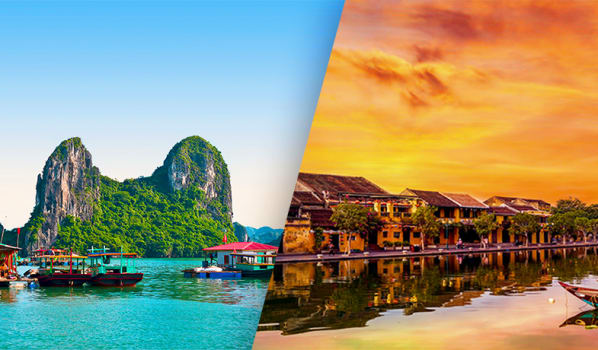
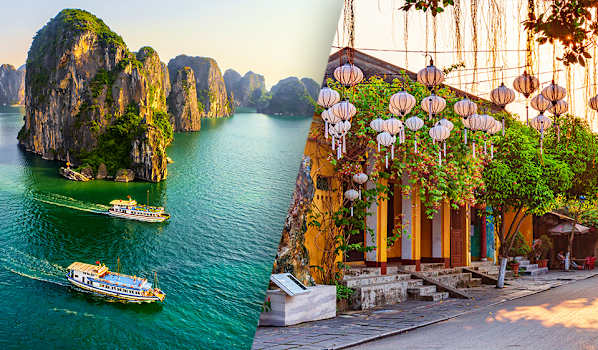
Ha Long Bay, about 4 hours from Hanoi, is one of Vietnam’s best-known and most photographed natural wonders. Ha Long Bay, whose name means “the place where dragons descended to earth,” offers a mesmerizing landscape. This scenery, created by the successive silhouettes of more than 2,000 limestone islets and rocks, is inscribed on the UNESCO World Heritage List. The best way to enjoy the bay is to take a boat tour. This way, you can explore caves in the morning, climb the rocks in the afternoon, and spend the evenings on the boat deck looking out over the bay. For those who want to avoid the crowds, Bai Tu Long Bay or Lan Ha Bay offers a much calmer Ha Long experience. Ha Long also offers opportunities for snorkeling and kayaking. However, be careful due to heavy ship traffic.
Sapa

Located in the mountainous region of Northern Vietnam, Sapa is a destination etched in memory for its surreal rice-terrace views. Cherished for its cool air since the French colonial period, Sapa is now among the top places to visit in Vietnam for both trekking and cultural exploration. Sapa’s rugged terrain, multicultural character, and breathtaking views make it Vietnam’s most popular destination for intermediate and advanced hikers.
The colorful clothing and daily lives of mountain peoples, such as the Hmong and Dao, can be observed up close in the city’s markets and on village walks. The most touristy place in the region is its town. In Sapa town, you can spend time by the lake and in the square while exploring the surroundings.
Instead of staying in Sapa’s city center, choosing a homestay in a village among the rice fields elevates the experience to a whole new level. You can see the rice fields at their most vivid from July to October.
Ninh Binh

Among the places to visit in Vietnam, Ninh Binh is too impressive to put into words. Quiet, almost as if it belongs to another world, and full of beauty to discover. With its high limestone mountains, calm rice fields, cave temples, and slow village life, it leaves a lasting impression. To get even a sense of the region’s atmosphere, we recommend setting aside at least 1 day here.
Also known as “Ha Long on land,” Ninh Binh is a mesmerizing natural park where limestone mountains rise amid rice fields and rivers. The Trang An Landscape Complex is on the UNESCO World Heritage List, and the rowboat tour through caves and river channels is the most popular activity. Because Ninh Binh is a few hours from the capital, Hanoi, it is also ideal for a day trip or an overnight stay.
There are several areas in Ninh Binh where you can take a boat tour. If you have plenty of time and want to see as many places as possible, you may even choose to join multiple tours. The two most popular tours are Tam Coc and Trang An.

Hang Múa is Ninh Binh’s distinctive viewpoint. Here, the river flows through the rice fields below. The climb is steep, about 500 steps, but the view is incredible and absolutely worth the effort. From the summit, the mountains seem to stretch on forever.
Hue

Hue (pronounced something like “hoo-way”) is Vietnam’s historic imperial capital. Today, Hue is known for its rich culture and cuisine, as well as the famous Complex of Huế Monuments, which is on the UNESCO World Heritage List. What is truly impressive, however, are the imperial tombs around the city. These are Hue’s real treasures. Thien Mu Pagoda and Hue cuisine are also among the city’s highlights. Hue cuisine reflects a sophisticated approach, inherited from the palace tradition, with careful attention to presentation. Bun bo Hue is a dish you absolutely must try.
Hoi An

Hoi An has a way of winning visitors’ hearts instantly. Perhaps this is because of its streets lit by glowing lanterns at night, the calm life along the Thu Bon River, and the seamless blend of history and culture with modern cafés and boutique shops. Hoi An is the favorite destination for most travelers visiting Vietnam. The old town, under UNESCO protection, is almost a living open-air museum, with its colorful lanterns and well-preserved merchant houses.
The architectural style, where Chinese, Japanese, and Portuguese influences converge, gives the city a distinctive character. For example, the Japanese Bridge is a 17th-century wooden bridge built by the Japanese community to connect to the Chinese quarter on the opposite side of the river. If you want to enjoy the sea, you can also visit An Bang and Cua Dai beaches, both just a few kilometers from the city.
In Hoi An, sewing workshops offer tailor-made clothing at affordable prices, an advantage that draws shoppers. Hoi An is also famous for its lanterns. For this reason, you might consider having a lantern made to take home as a souvenir of your trip.
Phong Nha-Ke Bang

Phong Nha, in central Vietnam, is the gateway to Phong Nha-Ke Bang National Park, which is on the UNESCO World Heritage List and home to one of the most extraordinary limestone karst landscapes. Formed more than 400 million years ago, the region is Asia’s oldest large-scale karst system. It is also known as one of Asia’s best cave-exploration destinations, featuring more than 300 caves and underground rivers. Discovered in 2009, Son Doong Cave is one of the largest caves in the world.
The park also features diverse flora and fauna, including many rare and endangered species. Visitors can explore the park’s natural beauty and take part in activities such as hiking, canoeing, and cycling. The best time to visit the Phong Nha-Ke Bang region is during the dry season, from March to August.
3-day Vietnam travel route
In a country like Vietnam, which stretches 1,650 km from north to south, a 3-day route necessarily means exploring one region in depth. Below, we have outlined a route covering northern Vietnam, with Hanoi as the base.
Day 1: Hanoi
Start the morning with a walk around Hoan Kiem Lake. Visit Ngoc Son Temple. Have breakfast in the Old Quarter’s narrow streets. In the afternoon, visit the Ho Chi Minh Mausoleum and Ba Dinh Square. In the evening, feel the spirit of the city with local flavors at the street venues known as Bia Hoi Corner.
Day 2: Ha Long Bay
Set out from Hanoi early in the morning and arrive in Ha Long after a journey of about 3 to 4 hours. Board the boat and let the bay tour begin! Enjoy lunch on board. End the day by visiting the quiet bays of the gulf.
Day 3: Ha Long Bay and return to Hanoi
Watch the sunrise over the bay in the morning. After breakfast and a final swim, the boat sets out on the return journey. After arriving in Hanoi in the afternoon, you can spend your final hours in the city at places such as the Temple of Literature and the Hoa Lo Prison Museum.
How many days are needed to visit Vietnam?

When planning a trip to Vietnam, consider the country’s size and travel times. To explore a single region (north, central, or south) in depth, 7 to 10 days can be enough. To make a full journey from north to south or south to north and visit the main stops, set aside at least 2 to 3 weeks. The short answer to how many days you need in Vietnam is this: Plan at least 2 days for each place you want to visit. Also add extra days for intercity travel.
Urban transportation in Vietnam

Urban transportation options in Vietnam are diverse and generally affordable. The Grab app is widely used in all major cities and offers both car and motorcycle taxi options; fares are set in advance, so there is no need to bargain. Buses are a common mode of urban transit. Renting a scooter is a practical option, especially in smaller cities such as Hoi An, Hue, and Ninh Binh.
Intercity flights in Vietnam are cheaper than expected. Traveling from Hanoi in the north to Ho Chi Minh City in the south by domestic flight is usually more practical than spending hours on a bus. Trains offer a more comfortable alternative to flying for intercity travel, although they are more expensive. The coastline offers beautiful views.
What to eat in Vietnam?

What to eat in Vietnam varies by region. Because Vietnam is a very large country, each of its regions, north, central, and south, offers a cuisine of its own. In every city, small street restaurants and market areas showcase local flavors. Vietnamese dishes feature plenty of fresh herbs, slow-cooked meats, and light broths. Rice and noodles are also common in many dishes.
- In the capital Hanoi, pho (Vietnamese noodle soup) made with ingredients such as beef broth and noodles, and spicy cha ca (turmeric fish with herbs) made with fresh fish fillet, are among the best-known dishes.
- In Ho Chi Minh City, goi cuon (fresh Vietnamese spring rolls) made with chicken and noodles, and com tam (broken rice) made with pork chop and rice grains, are staples of street cuisine.
- Vietnamese-style hot pot is easy to find in both the capital, Hanoi, and Ho Chi Minh City, the country’s financial and cultural center. It is usually made with a sour broth, plenty of herbs and spices, vegetables, beef, and rice noodles.
- In Hoi An, seafood makes up a large part of the menu, and shrimp is served in many different ways.
- In Da Nang, Mi Quang (turmeric rice noodles with meat or seafood) is a popular dish. It is served with noodles, chicken or seafood, pineapple, fresh herbs, lemon, and peanuts.
- Alongside main dishes, crepes, rich Vietnamese coffee with milk served over ice, and pastry desserts also stand out.
Note: In Vietnam, meat dishes may contain pork as well as chicken and beef. Do not forget to ask about the contents of the dish before ordering.
What to buy in Vietnam?

Vietnam is exceptionally rich in handicrafts and local products. Tailors in Hoi An make tailor-made clothes at affordable prices, and the clothes can be ready within a few days after measurements are taken. Handmade lanterns, ceramic bowls, and bamboo products are popular souvenirs found in almost every region. Coffee and tea are among Vietnam’s most popular gifts. Weasel coffee (chon coffee), in particular, is among the world’s most expensive and rare gourmet coffees.
Silk and hand-embroidered fabrics are especially popular in Hue and Hoi An. Lacquer artworks and paintings are also distinctive crafts in Vietnam. You can also buy pearl jewelry from the Ha Long Bay region. Because bargaining is a tradition when shopping, it is generally considered normal to negotiate a little before accepting the price.
Where to stay in Vietnam?

Vietnam offers a wide range of options, from budget stays to luxury accommodations. But let’s say this upfront: The city you stay in will directly affect the logistics, pace, and comfort of your trip. In a country that stretches 1,600 kilometers from north to south, climate, urban planning, and architecture vary significantly by region. Because Hanoi and Ho Chi Minh City are the most touristy cities, they also offer many accommodation options. We have listed the places where you can stay in Vietnam by region and city:
Hanoi, the capital of northern Vietnam, is one of the most popular destinations for tourists seeking accommodation. If you are taking a short 2- to 3-day trip to Vietnam, you can stay directly in Hanoi. In the Old Quarter, the streets are narrower and more crowded. The French Quarter has a more refined and luxurious atmosphere.

- Located in northern Vietnam, farther inland, Sapa stands out for its magnificent terraced rice fields, local ethnic tribal culture, and cool mountain climate. Hotels in the center are within walking distance of cafés and restaurants. If you want to stay in a nature house, consider villages such as Ta Van or Cat Cat.
- Located in southern Vietnam, Ho Chi Minh City is the country’s financial and cultural center. In Ho Chi Minh City, Districts 1 and 3 offer the most central options for tourist accommodations.
International hotel chains also operate in all major cities.
Why visit Vietnam?
Vietnam offers a distinctive travel experience that is difficult to compare with any other country. Its diverse climate zones and geography make it possible to enjoy mountain hiking, a beach holiday, and historic city tours all within a single country. Its culinary culture is also a reason for discovery in itself. The hospitality of the local people and prices that do not strain travel budgets make Vietnam accessible to travelers of all ages and budgets. The fact that it has eight sites on the UNESCO World Heritage List is a concrete sign of its cultural richness.
Practical information for your Vietnam trip
Currency: Vietnamese dong (VND). Euros or dollars are generally not accepted by street vendors, so you may need to use Vietnamese dong. Cash is still widely used. ATMs are widely available in every major city. Credit cards are accepted at large hotels and shopping malls, but cash is usually preferred at small restaurants and markets.
Plug and socket types: Type A, B, and C sockets are used in Vietnam. The standard voltage in Vietnam is 220 V, and the frequency is 50 Hz. Most of the devices you bring from Türkiye require an adapter.
Language: Vietnamese is the official language. In tourist areas, it is generally possible to communicate in English at a basic level. Because the country was formerly under French rule, French can be spoken in some places. Learning a few basic Vietnamese words helps win the goodwill of local people.
Health: Travel insurance is also strongly recommended for Vietnam. Before your trip, consult your doctor about Hepatitis A, typhoid, and other travel-related vaccines.
Etiquette: At temples and religious sites, clothing that covers the shoulders and knees is required. Showing respect to elders and avoiding loud talking in crowded places are important in Vietnamese culture.
Phone and internet: Getting a local SIM card is both economical and practical. It can be easily found at airports and in city centers.
Safety: Vietnam is generally considered one of the safest countries. Because motorcycle traffic is heavy, we recommend you exercise caution.
Frequently asked questions
What are the 10 most popular places to visit in Vietnam for tourists?
Ha Long Bay, Hoi An Ancient Town, Hanoi Old Quarter, Sapa rice terraces, Ho Chi Minh City, the Mekong Delta, Hue Imperial Citadel, Phong Nha caves, Ninh Binh, and the Da Nang region are among the most visited destinations in Vietnam.
Which cities should I visit in Vietnam?
For Northern Vietnam, Hanoi and Ha Long; for the central region, Hue and Hoi An; and for the south, Ho Chi Minh City and the Mekong Delta form the classic route. Depending on your time, you can choose a single region or take a full journey from north to south.
When is the best time to visit Vietnam?
The best periods are October to April for Northern Vietnam, February to August for Central Vietnam, and December to April for Southern Vietnam. The most balanced period for seeing the whole country is from December to March.
Is Vietnam safe for tourists?
Yes, Vietnam is generally a safe destination. It is also important to be careful in heavy motorcycle traffic. In big cities, using the Grab app helps prevent problems with taxi drivers.
Is Vietnam an expensive country?
Vietnam is one of Southeast Asia’s most affordable destinations for budget travelers. With a daily budget of about $30 to $50, it is possible to cover comfortable accommodations, local restaurants, and transportation. Luxury hotels and tours naturally increase the budget.
Where should I stay in Vietnam?
Hanoi Old Quarter, the area around Hoi An Old Town, Districts 1 and 3 in Ho Chi Minh City, and village guesthouses in Sapa are among the highlights. Depending on your budget, hostels, boutique hotels, and international hotel chains are available in every major city.
Can you swim in the sea in Vietnam?
Yes, Vietnam has a long and beautiful coastline. Da Nang, the beaches near Hoi An, Nha Trang, and Phu Quoc Island are popular for swimming and beach vacations. The best sea season varies by region; February to August is ideal for Central Vietnam, and December to April is ideal for the south.
When do monsoon rains start in Vietnam?
In Southern Vietnam, monsoon rains begin in May and continue through November. In Northern Vietnam, the rainy season runs from May to September. During the monsoon season, rainfall is typically short but intense, and most of the day is sunny.
Should I start with Hanoi or Ho Chi Minh City?
Both are good starting points. If you are traveling from north to south, you can start in the capital, Hanoi, and continue to Ho Chi Minh City, or do the reverse. Hanoi is slightly more convenient for flight connections. Ho Chi Minh City is ideally located for continuing on to Southern Vietnam and the Mekong Delta.
How much money should I bring to Vietnam?
The average daily budget varies with your travel style. For budget travel, 30 to 40 dollars per day can be enough. For the mid-range segment, $60 to $80 provides a more comfortable experience. For luxury travel, the budget is determined by personal preference. Carrying local cash, Vietnamese dong, is useful, especially in markets and for street food.