Let’s go: History of Konya
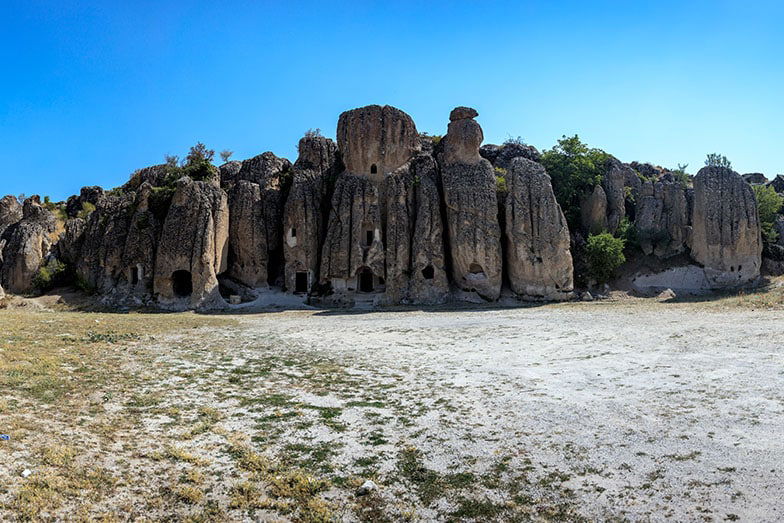
It is worth getting an idea of Konya’s history before visiting the area. Konya is among the oldest settlements in Anatolia and its deep-rooted past is revealed in every corner of the city. The area’s first settlement dates to about 6000-5000 BC and, at various times, the region was dominated by the Hittites, Phrygians, Romans and Byzantines, and the Great Seljuk and Anatolian Seljuk states, later coming under the rule of the Karamanoğulları Principality. After the Ottoman sultan Mehmet the Conqueror put an end to this principality, it passed into Ottoman dominion.
Konya has long been important in Anatolia and remains significant – in addition to being Türkiye’s largest province in terms of area, the country’s sixth most populous city and a commercial center, it is the site of the Tomb of Mevlâna.
In the heart of Anatolia: Konya

When visiting Konya, be aware that the region is quite cold in the winter; in summer, the days are hot and dry, and the nights are chilly.
While spring and autumn are the most pleasant seasons for visiting Konya, the month of December is special: Depending on the year, but usually around the second week in December, the Sheb-i Arus Mevlâna ceremonies commemorating the death of Jalaladdin Rumi take place, attracting thousands of local and foreign tourists.
In the first and second week of July, the Nasreddin Hodja Festival is held in Akhisar. Nasreddin Hodja was a 13th century scholar, who is also considered a folk hero and a legendary trickster.
Historical Sites in Konya

Karatay Madrasa

We begin our tour of Konya at the Karatay Madrasa, one of the symbols of the city. The Seljuk-style madrasa was built to provide religious education during the reign of Izzeddin Keykavus II.
The impressive entrance gate of the madrasa is considered a masterpiece of Seljuk stonemasonry, featuring on its door inscriptions regarding the madrasa’s construction along with various patterns. On the other side of the door are selected verses and hadiths rendered in relief form.
As its name suggests, the madrasa is in the Karatay district of Konya, and is accessible from the city center via taxi or minibus. You can also take the tram from the Konya Bus Station.
Women’s Bazaar
Another special stop in the Karatay district is the vibrant Melike Hatun Bazaar. Featuring local products as well as fruits and vegetables, the century-old bazaar is named after the Mevlâna’s daughter but is mainly known as the Women’s Bazaar. Why? Because, traditionally, women from the different districts and towns of Konya sold their own produce in this market. Although male vendors took their place here in time, the market continues to exist as the city’s most deep-rooted historical bazaar.
Çatalhöyük

Set in the Çumra district, approximately 46 kilometers from the Konya city center, Çatalhöyük is a fascinating Neolithic settlement – among the many that illuminate the history of humanity. The site features notable remains such as the first domestic structure, the first landscape painting and findings attesting to the cult of the mother goddess, corresponding to about 7400 BC.
Bedesten Bazaar
Evidence suggests that the site of the Konya Bedesten Çarşısı (Covered Bazaar) has been utilized for commercial purposes since the Roman era. In any case, it is Konya’s oldest trade center, with the original structure erected in 1538. The Bedesten Bazaar was restored and currently features more than forty lanes, 2,600 shops and the historic Kapu and Aziziye mosques. It is one of Konya’s most visited places, popular for buying clothing, accessories and souvenirs. As well, the bazaar includes restaurants and cafes that serve local dishes.
Museums in Konya

Mevlâna Museum

Many people come to Konya solely to see the Mevlâna Museum – which is one of the most visited museums in Türkiye. Set in the Mevlâna’s former lodge, the complex is known as the Green Dome, due to its tower covered with turquoise-colored tiles. The museum houses the Mausoleum of Mevlâna, erected after Rumi’s death on December 17, 1273; his tomb is built on four thick towers known as elephant’s feet and features ornate tiles, inscriptions and reliefs.
The Mevlâna Museum also contains Mevlevi artifacts and manuscripts, along with oil lamps and musical instruments; its capacious library has more than four thousand manuscripts in 2,756 volumes dating from the Seljuk, Karamanoğulları and Ottoman periods. It should be noted that the complex is a significant spiritual and religious site as well as a historical monument.
Konya Science Centre
Fast forwarding through time, we arrive at the Konya Science Centre, the first science center of Türkiye. Opened with the support of TUBITAK, the center has a planetarium, a laboratory, and a library, as well as an observation tower and various exhibition galleries. The museum is in the Selçuklu district, about 17 km from the city center, and easily accessible via public transportation or private vehicle.
Natural beauties in Konya

Kyoto Japanese Park

Built by the Konya Metropolitan Municipality in honor of its sister city Kyoto, the 36,000-square-meter Kyoto Japanese Park features ponds, gardens and picturesque wooden bridges and gazebos, along with a lake and a café built in a traditional Japanese architectural style. The park is in the Selçuklu district, approximately 13 kilometers from the city center.
Tropical Butterfly Garden
Also in the Selçuklu district is the Konya Tropical Butterfly Garden. Set within a transparent dome, the Konya facility is considered the largest tropical butterfly garden in Europe, with a 3,500-square-meter visiting area and a 1,600-square-meter butterfly habitat. Fifteen butterfly species live in the garden – around 20,000 butterflies – along with 98 plant species. The Tropical Butterfly Garden is around 10 kilometers from the city center.
Meke Crater Lake

Set in the Karapınar district, Lake Meke is composed of two nested volcanic crater lakes with various inlets. It is a striking sight: a crater lake featuring a volcanic cone containing another crater lake. Lake Meke is a registered natural monument and, in the past, was an important wetland and bird habitat. The lake is a two-hour drive from the city center.
Tınaztepe Cave

Tınaztepe Cave, in the Seydişehir district, is located at a transitional segment of the Taurus Mountains along the Konya-Antalya highway. One of the world’s longest caves, Tınaztepe has remarkable stalactites and stalagmites, as well as a lake. The areas of the cave open to visitors feature a consistent temperature throughout the year. The cave is about a 90-minute drive from the city center.
Local products: Dining in Konya

Konya is known as the center of Anatolian flavors. The regional cuisine displays the characteristic features of Anatolian culture blended with the traditions of Seljuk palace cooking and Mevlevî culture.
Konya’s local dining offers a variety of cooking techniques and delicious local products, along with meat dishes, pastries, and soups. Fırın kebab (oven kebab), which has a very important place in Turkish cuisine, the long (almost one meter!) etli ekmek (meat bread) and peynirli pide (cheese pita) are just three of the well-known Konya dishes, but there are many more:
- Etli ekmek (meat bread)
- Tirit (a type of dough soaked in meat broth)
- Kuru bamya çorbası (dried okra soup)
- Fırın kebabı (oven kebab)
- Peynirli pide (cheese pita)
- Çebiç (spit-roasted lamb/goat)
- Arabaşı çorbası (a type of chicken soup)
- Mevlâna böreği (crisp, triangle-shaped pastries)
- Etli topalak çorbası (bulgur and meat soup)
- Sac arası tatlısı (a type of dessert pastry)
- Batırık (bulgur salad)
- Dilber dudağı (a sweet dessert dumpling)
- Höşmerim (a type of semolina halva)
- Sac böreği (sheet pastry)
One-of-a-kind Mevlâna Candy!
A discussion of dining in Konya is incomplete without mentioning Mevlâna candy. An iconic Konya product, Mevlâna candy – called “cheese candy” by locals – is a melt-in-your-mouth confection, snow-white in appearance and made with sugar, water and lemon salt. Traditional Mevlâna candy is available in most of Konya’s confectionery shops and in the bazaars – it makes a great gift if you can resist eating it yourself.
Important Konya notes

Konya is an exceptional city, extraordinary in terms of its festivals, history, parks, and natural surroundings. To enjoy your own experience of Konya, click here! Keep reading for some notes on transportation and accommodation in the area.
Accommodation in Konya
Accommodation is plentiful in Konya, in part due to the thousands of visitors who come to the city to see the Mevlâna Museum. A range of hotels and hostels suit almost any budget; in addition to standard accommodation, thermal and boutique hotels are available. To simplify your travel planning, check out the Turkish Airlines Holidays holiday packages for Konya.
Transportation in Konya
As one of Türkiye’s largest cities, Konya has a robust public transportation network that includes trams, buses, and minibuses. Taxis and car rentals are also available.
Transportation from Konya Airport to the city center

Konya Airport is 18 kilometers from the city center. Transportation to the city is provided by HAVAŞ shuttle buses – about a 30-minute drive, as well as private transfers and taxis serving 24/7. While there is no direct public transportation from the airport to the city center, it is easy to rent a car at the airport.