Tips for visiting a big, crowded city
- Not all areas of a megacity will be crowded, but as a tourist, you’ll most likely be in the more bustling neighborhoods. It’s a good idea to “go with the flow”. On the other hand, it’s also a good idea to use your common sense and trust your instincts. Keep your wallet and phone in a secure bag, for instance. If you need to pause to look at a map or chat with a companion, step to the side so you don’t block other pedestrians. Be mindful of the people around you!
- A plan – however flexible – is useful on any trip. In large cities, a plan can be even more critical due to factors such as traffic and distance. What might seem like a short trip could stretch into hours, depending on traffic patterns. Get an idea of the available transportation options to the areas you want to visit. Keep in mind that, in some cities, walking may be the fastest and most efficient method of reaching your destination!
- Enjoy! One of the most intriguing aspects of visiting a big city is simply absorbing the atmosphere – people watching, eating at local restaurants, checking out obscure museum or just walking around or sitting in a park. And remember, you don’t have to see everything – even long-time residents of cities are still discovering new places and sights!
If you are ready, the world’s most populated cities are below, along with a link to plane tickets.
Travel tips for big cities
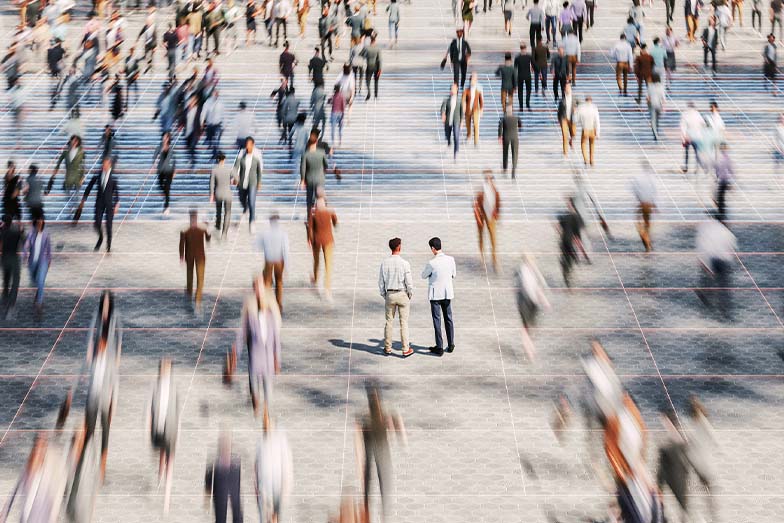
Traveling around a densely populated city may seem intimidating at first, but with careful planning and a few pointers, you’ll find that it’s relatively uncomplicated to navigate most cities. For starters, digital maps and translations apps are great tools for getting around any city!
Second, when booking your accommodations, consider what you want to see and where you want to be. If you’re planning on visiting tourist attractions, the city center is usually a good place to base yourself. Conversely, if you plan on visiting sites outside the center, look at accommodations that are near public transportation connections; if you’re renting a car, consider the availability of parking as well as convenient access to roads.
Third, even in the era of remote work, there are still many people commuting to jobs. Try to avoid the morning and evening rush hours, if possible, whether you’re driving or using buses or trains. Additionally, be prepared for unexpected delays — remember that getting there is just part of the journey — and maybe carry a bottle of water or snacks in your bag, just in case.
And here’s another tip. If you’re carrying your passport or other important documents with you, bring a waterproof pouch, in case it rains. You can put your phone in the pouch too!
#1 Tokyo

Topping the list of the world’s most populous cities, Tokyo has a population of 37.3 million and, according to a report published by CNN Travel for 2022, Tokyo is the fifth most expensive city in the world. Needless to say, during the city’s high season, particularly in early spring when the famous cherry blossoms bloom, Tokyo is very attractive to tourists – and the city’s prices tend to reflect this, sometimes almost doubling. Tokyo also has some unique codes: It is worth noting that there is no smoking on the street, speaking in a low voice on public transport is an unwritten rule, and city residents wait politely and patiently in seemingly endless queues. Hint: The Akihabara district is renowned for its discount electronics stores, as well as anime and manga shops. Other highlights of Tokyo include:
- The ancient Meiji Jingu Shrine
- The Imperial Palace, the official residence of the Emperor and his family
- The colorful Yayoi Kusama Museum
- Memory Lane, the address of street delicacies
- Shibuya, known as the Times Square of Tokyo
For more tips on Tokyo, you can visit our One city, three days: Tokyo guide. Turkish Airlines operates direct flights from İstanbul to Tokyo every day. You can visit the link for plane tickets to Tokyo.
#2 New Delhi

New Delhi, India’s capital, ranks second among the world’s most populated cities with a population of 31 million. This relatively modern city offers interesting and sometimes intricate landscapes. Home to country’s bureaucrats, artists, fashion designers and famous names, New Delhi has developed considerably in terms of contemporary art, especially in recent years, and features numerous art galleries. And the city is one of Asia’s most important fashion centers. You can visit the link for tickets to New Delhi and a city guide.
#3 Shanghai
Shanghai, considered China’s gateway to the world in many respects, ranks third among the world’s most populous cities with a population of 28 million. Located in the easternmost part of the Yangtze River Delta, Shanghai is China’s largest commercial and financial center. Visit the Chen Xiang Ge and Jade Buddha temples to explore Shanghai’s historical past and explore the art galleries in the M50 area for a dose of modern life. Stroll along The Bund’s waterfront promenade and gaze at the diverse architectural styles of the buildings in the district, dine at world-famous restaurants, and enjoy the green in the Yu Garden.
You can visit the link for a Shanghai flight ticket.
#4 Dhaka

Dhaka, the capital of Bangladesh, ranks fourth among the world’s most crowded cities, with a population exceeding 24 million. Located in the heart of Asia, this intensely dense metropolis offers visitors a sense of “harmony within chaos.” Known as the “Rickshaw Capital of the World,” the city’s streets are filled with hundreds of thousands of ornately decorated bicycle taxis (rickshaws), creating a colorful rhythm that defines both traffic and daily life.
Along the banks of the Buriganga River, where life never seems to pause, Dhaka presents the Mughal Empire’s historical legacy intertwined with the rush of the modern world. In the city, must-see landmarks include the enchanting Lalbagh Fort with its unfinished story, the grand Ahsan Manzil, known as the “Pink Palace,” and the National Parliament House, regarded as one of the most important masterpieces of modern architecture worldwide. You can visit this megacity by booking a flight to Dhaka.
#5 Cairo

Cairo, the capital of Egypt and one of the world’s most crowded cities, promises visitors a mysterious journey through time. It is the largest city in the country and the third-largest on the continent. With a population of around 23 million, the city’s density and heat follow you with almost every step. Cairo offers nearly every convenience of modern life and dazzles with its skyscrapers. At the same time, nourished by the Nile River, its streets and bazaars, along with the Pyramids of Giza, counted among the Seven Wonders of the World, and its broader cultural fabric reflect the unique wisdom of an ancient civilization. Like many other crowded cities, Cairo is home to diverse social classes and striking contrasts in financial and cultural life. In Egypt’s bustling capital, with a history stretching back 7,000 years, traffic can be challenging, so it is wise to plan your transportation accordingly. We recommend visiting the Egyptian Museum in Cairo, located in the historic district listed as a UNESCO World Heritage Site, as well as the pyramids and the Great Sphinx of Giza. The long-awaited Grand Egyptian Museum is now welcoming visitors at full capacity and attracting millions from around the world. If you wish to explore the capital of this ancient civilization, you can book a flight to Cairo.
#6 Sao Paulo

Colorful and constantly in motion, São Paulo is the largest city in both Brazil and South America. In this cosmopolitan metropolis, where people from diverse backgrounds live side by side, life never pauses. With a population of 23 million, São Paulo ranks among the world’s most crowded cities, offering every element of dynamic urban life. Beyond its vibrant city center, São Paulo also reveals its favelas — hillside neighborhoods that have become an integral part of the city’s identity and cultural landscape. Built across the Serra do Mar hills, the city’s highlights include Ibirapuera Park, the São Paulo Football Museum, São Paulo Cathedral, and the São Paulo Museum of Art.
You can visit the link for a flight to São Paulo.
#7 Mexico City

Carrying the legacies of the Aztecs and the Maya, two of the world’s oldest civilizations, Mexico City ranks seventh among the world’s most populous cities, with a population of 22.7 million. Its streets, like those of other densely populated metropolises, are constantly in motion. Combined with the warmth of its people, its mysterious rituals, artistic expressions spilling into everyday life, and its famous sauce-laden street flavors, Mexico City offers scenes well worth exploring. In a city where even the most ordinary moments feel like a festival, here are a few places we highly recommend:
● The Frida Kahlo Museum, bearing witness to the life of Frida Kahlo
● The magnificent ancient city of Teotihuacan in the Valley of Mexico
● Paseo de la Reforma Boulevard
● Zócalo, one of the largest squares in the world
You can visit the link to book a flight to Mexico City.
#15 İstanbul

And now we come to the “Gate of Happiness”, our home, İstanbul. Approximately 16 million people live in İstanbul, which ranks fifteenth on the list of the world’s most populated cities. While much of İstanbul’s scenic charm comes from its extraordinary setting along the Bosphorus, the city’s historical background as a long-running capital for powerful civilizations adds to its allure, as do its cultural richness and tremendous diversity. İstanbul’s culinary scene is outstanding – for more tantalizing information, you can check out the city’s Michelin-starred restaurants. Other helpful links: İstanbul’s local sides, its most scenic streets, and the İstanbul transportation guide. We wish you a wonderful trip in advance and hope to meet you in İstanbul as soon as possible.
How do cities get so populous?

How do cities get so big and crowded? Urbanization and migration are cited as primary drivers of population growth and the transformation of a town or small settlement into a metropolis.
The benefits of urban development include economic, educational, and social opportunities, as well as improved health services: these opportunities attract people, whether from the countryside or from across the ocean, and thus the population expands.
What you should know before visiting the world’s most populous cities

While visiting a big, densely populated city is exciting, it also requires a bit of preparation. Here’s what you should know before visiting major cities for a more enjoyable and hassle-free trip:
- Budget planning: There’s a price to pay for living in a major city. While residents know where to find bargains, for visitors, it’s probably a good idea to plan for higher-than-usual expenses — as well as unexpected expenses.
- Health and emergencies: Before you travel, make sure you have health insurance and know what it covers in your destination. Also, make a list of emergency numbers in your destination city and identify health facilities near your lodging in advance.
- Weather and appropriate clothing: Before packing, check the weather at your destination. Having clothing appropriate for the climate will make your trip easier. On the other hand, big cities have lots of places to buy what you need!
- Safety: In crowded cities, your safety should always be your top priority. We suggest carrying a bag that will keep your money and valuables secure. Take extra precautions, especially in crowded squares and public transportation, and consider making a list of emergency phone numbers.
- Accommodation: Booking early allows you to find the best deals and explore the options that best suit your needs; you may wish to stay near the city center or someplace with access to public transportation lines.
- Transportation options: In large cities, preplanning transportation can save time. Subways, trams, and buses are frequently the quickest and most cost-effective modes of public transportation. Get a city transportation card and plan your route ahead of time using mobile applications.
- Food culture: Crowded cities are often culinary hotspots and certainly it’s fun to sample new dishes and products — but do be mindful of hygiene and follow local recommendations, particularly for street food. Your health is important!