1. Edirne Selimiye Mosque and Complex (Edirne)

Considered one of the most magnificent works of its period, the symbolic Selimiye Mosque of Edirne, is famous for its technical excellence and aestheticism. The mosque, famous for its enormous dome, which is referred to as the pinnacle of single-domed structures, was built by Mimar Sinan in the name of Sultan Selim II. The stone, marble, wood, mother of pearl and tile motifs used in the interior design of the mosque, which Mimar Sinan described as his masterwork, are leading examples of the period, represents the pinnacle of its kind. You can also read our article, Mimar Sinan’s masterpiece: Edirne Selimiye Mosque, to explore Selimiye’s architecture, history, and visiting tips.
Date of Inscription on the UNESCO World Heritage List: 2011
Date of Inscription on the UNESCO World Heritage List: 2011
2. Historic areas of Istanbul (Istanbul)

Istanbul, straddling both the continents of Europe and Asia, was home to Roman, Byzantine, and Ottoman civilizations. Istanbul is included in the UNESCO World Heritage List as 4 regions: the Sultanahmet Archaeological Site, the Suleymaniye Conservation Area, the Zeyrek Conservation Area and the Istanbul Land Walls Conservation Area. To explore the layers of the city’s UNESCO heritage in more depth, read our guide Exploring Istanbul’s rich history: The Historic Peninsula.
Date of Inscription on the UNESCO World Heritage List: 1985
3. Bursa and Cumalıkızık, the birth of the Ottoman Empire (Bursa)

The great inns and bazaars of Bursa, the first capital of the Ottoman Empire, are telling of the important commercial role of the city. The Hanlar district was the heart of the economy throughout the 14th century. Bursa’s urbanization model also inspired the Ottoman-Turkish cities that were later established. Cumalikizık Village, which is home to one of the narrowest streets in the world (80 cm wide), made significant contributions. To get to know this special heritage more closely, with its stone streets, traditional houses, and village life, you can take a look at our Cumalıkızık Village travel guide.
Date of Inscription on the UNESCO World Heritage List: 2014
4. Archaeological Site of Troy (Çanakkale)

Troy, one of the Unesco World Heritage Sites in Türkiye, became one of the most renowned ancient cities in the world after the epic of Homer’s Iliad draws in history buffs in spite of the looting and destruction that occurred upon its discovery. The 9 layers seen in Troy illustrate more than 3,000 years of history. This unusual land of Anatolia, the Aegean, and the Balkans carries the history of many civilizations. The earliest settlement in Troy has levels remaining from the early Bronze Age from 3000-2500 B.C. The later levels are marks from the Roman period of 85 B.C – 8th B.C.E. Troy serves as a reference. To explore this ancient city, where legends and real history intertwine, in more depth, read our article on the Ancient City of Troy.
Date of Inscription on the UNESCO World Heritage List: 1998
5. The multi-layered cultural landscape area of Pergamon (Izmir)

Pergamon, known as the city of the firsts, contains layers belonging to the Hellenistic, Roman, Eastern Roman and Ottoman periods. The multi-layered cultural landscape area represents the best example of the Hellenistic period urban planning, with the monumental architecture of the ancient Pergamon settlement. The temple of Athena, the Temple of Trajan, the steepest theatre structure of the Hellenistic period, the library, the Heroon, the altar of Zeus, the Temple of Dionysus, the agora and the gymnasium are among the most outstanding examples of this planning method and period architecture. The city also maintained its importance with many mosques, inns, baths and it also remained an important commercial center. To learn more about this multi-layered heritage, from ancient Pergamon to Ottoman traces, read our Bergama travel guide.
Date of Inscription on the UNESCO World Heritage List: 2014
6. The Ancient City of Ephesus (Izmir)

The ancient city of Ephesus, home to the Temple of Artemis, one of the 7 Wonders of the world, is one of the most important centers of the ancient period. It has been inhabited continuously for about 9000 years starting from the prehistoric period and has been a very important port city and cultural-commercial center. It houses works that bear witness to the early Christian period, such as the basilica built on St. John’s Tomb, Artemision, built in the 8th century B.C, and the House of the Virgin Mary. Ephesus is also among the most important structures in religious history, with the House of the Virgin Mary, a Christian pilgrimage site, and the Islamic structures built during the Beylikler period. To get to know Ephesus, one of the most magnificent cities of the ancient world, in all its aspects, you can also consult our Ephesus Ancient City travel guide.
Date of Inscription on the UNESCO World Heritage List: 2015
7. Aphrodisias Ancient City (Aydın)
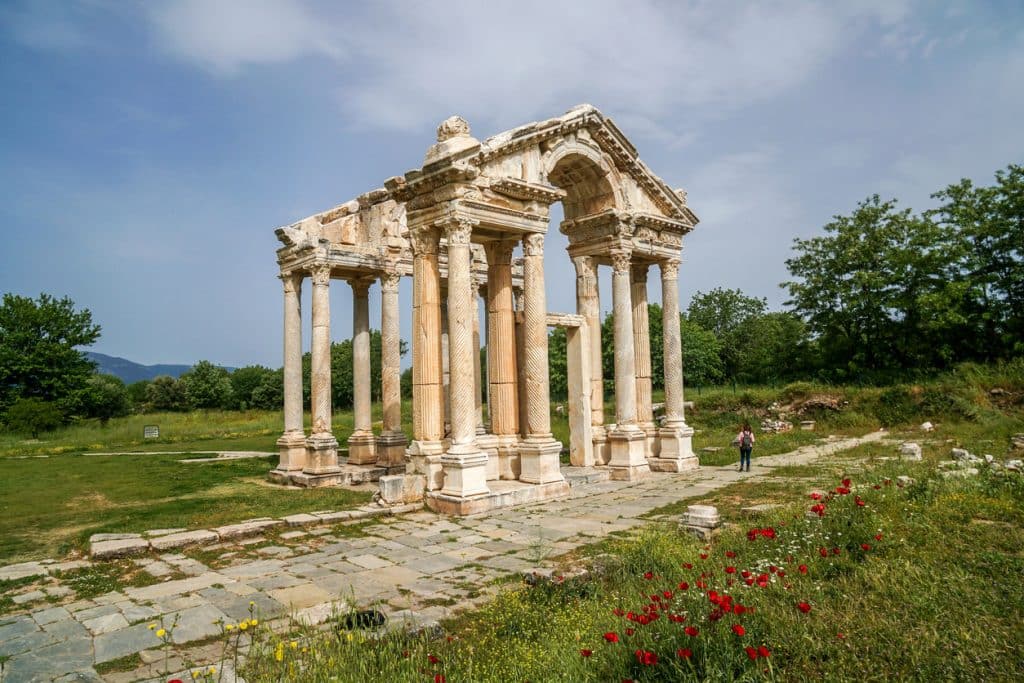
The famous photographer Ara Guler discovered the city Aphrodisias, named after Aphrodite, the mythological goddess of love and beauty. Aphrodisias originated as a small village in the 6th century, then during the period of intense urbanization in the Menderes Valley, it gained the status of the city-state (polis) in the 2nd century BC. Aphrodisias, had close ties with Rome in the 1 century B.C and was protected by Octavian, who would later assume the title of Augustus as Roman Emperor, and began to develop rapidly. The archaeological significance of Aphrodisias comes from its exceptionally well-preserved state. To explore this city, which stands out for its marble craftsmanship, monumental structures, and discovery story, in more detail, you can read our Aphrodisias Ancient City guide.
Date of Inscription on the UNESCO World Heritage List: 2017
8. Xanthos-Letoon (Muğla)

The first known democratic union in history, the two important ancient cities of the Lycian Union that have survived to the present day are Xanthos and Letoon.
Xanthos, remained independent until it came under the rule of the Persians in 545 B.C. Upon surviving the fires, it became the capital of the Lycian Union in the 2nd century B.C. Letoon, was the religious center of Lycia in antiquity, is home to the temples of Leto, Apollo, and Artemis, as well as the ruins of a monastery, a fountain, and a Roman Theatre. The largest temple dedicated to Leto, the mother of Artemis and Apollo, is located to the West and known as the Temple of Leto. The Temple of Apollo, located to the East, has not been as well preserved as the Temple of Leto. The Temple of Artemis is located in between the other temples and is the smallest in size. Together, Xanthos and Letoon once again highlight the Türkiye UNESCO World Heritage List. For more information about these two ancient cities, which together showcase Lycia’s political and religious heritage, you can consult our travel guide to Xanthos and Letoon.
Date of Inscription on the UNESCO World Heritage List: 1988
9. Hieropolis-Pamukkale (Denizli)

One of the 19 places inscribed on the UNESCO World Heritage List in Türkiye, Pamukkale boasts both natural and historical features. A natural wonder formed by the aftermath of 400 thousand-year-old earthquakes. The majestic white travertines were formed by calcium oxide-filled waters from the southern foothills of Caldağ. The archaeological city of Hierapolis, famous for its ruins from the late Hellenistic and early Christian periods, is one of the most striking centers that has endured from ancient times. The city was the capital of the Phrygia region during the reign of Constantine the Great and became an episcopal center during the Byzantine period. To learn more about this unique heritage, with its white travertines and ancient cityscape, you can consult our Hierapolis-Pamukkale travel guide.
Date of Inscription on the UNESCO World Heritage List: 1988
10. Neolithic Site of Çatalhöyük (Konya)
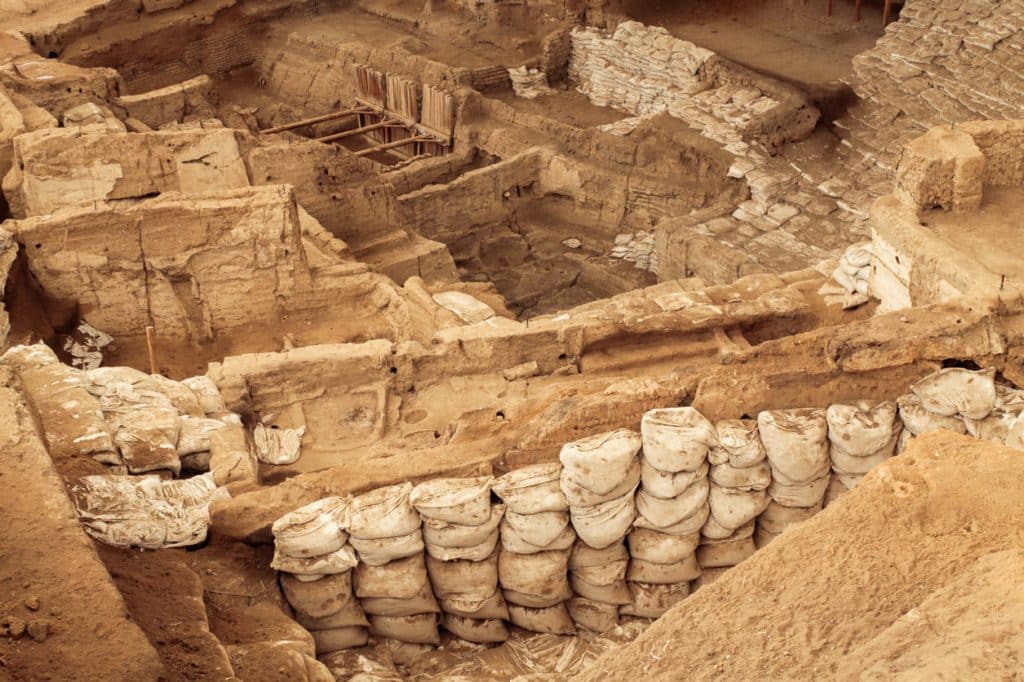
The Neolithic City of Çatalhöyük is notable for its presentation of transition to settled social life, an important period in the development of humanity, and important social changes such as the beginning of agriculture and hunting. The Neolithic City of Çatalhöyük is home to two mounds, the Eastern Mound revealing eighteen levels of Neolithic occupation between 7400 BC and 6200 BC. The levels consist of wall paintings, reliefs, sculptures and other artistic elements symbolizing social organization and transition to settled life. The Western Mound shows cultural features dating back to the Chalcolithic period, from 6200 BC to 5200 BC. With these features, Çatalhöyük provides evidence of the transition from settled villages to urban life in a single location over 2,000 years and holds a very important place as one of the world’s oldest settlements. To explore this special settlement, which carries traces of Neolithic life to the present day, in more detail, you can read our Çatalhöyük travel guide.
Date of Inscription on the UNESCO World Heritage List: 2012

11. Göreme National Park and Cappadocia (Nevşehir)

Cappadocia has a landscape unlike any other, as a result of the erosion caused by active volcanoes of geological times. The lava and ash spewed by Mount Hasan, Erciyes and Güllü Mountain 10 million years ago formed a tuff layer. These layers hardened over time and transformed into different shapes with the erosion caused by rain and wind. Cappadocia, famous for its mystical air and labyrinthine of underground cities Ürgüp, Goreme, Uchisar, Ortahisar, distinct fairy chimneys, rock Hotels, and impressive valleys, is worth seeing for its cave hotels and impressive valleys. To explore this unique geography, from fairy chimneys to underground cities, more comprehensively, you can also consult our guide to places to visit in Cappadocia.
Date of Inscription on the UNESCO World Heritage List: 1985
12. Hattusha: the Hittite Capital (Çorum)

As the Capital of the Hittite Empire, for centuries Hattusha has been a very important Center in Anatolia. Centuries later it was re-established by Hattusili I and became the capital of a civilization that would rule for more than 400 years. Today, the vast majority of it is from the Haliya Period during the reign of King IV the Great. Among the ruins belonging to the Tudhaliya period are temples, royal residences, and fortifications. The largest religious structure of Hattusa, the Great Temple, consists of two rooms which are thought to be dedicated to the greatest deities, The Storm God and The Sun Goddess. Yazılıkaya Temple is considered the city’s most magnificent open-air temple. To examine the prominent structures and the visiting route in the capital of the Hittites more closely, you can read our Hattusha travel guide.
Date of Inscription on the UNESCO World Heritage List: 1986
13. Safranbolu (Karabük)

Safranbolu, located in the Paphlagonia region of Homer’s Iliad saga, has been a settlement since ancient times due to its geographical positioning on the road connecting the Black Sea coast to Western, Northern and Central Anatolia. Safranbolu has been controlled by the Turks since the beginning of the 14th century and became a prominent center of trade linking Asia and Europe in the 18th century. A great example of untouched Turkish urban history, this city is truly rare with its traditional urban nuances, wooden masonry houses, and monumental structures, all of which have been declared sites. The Safranbolu houses were positioned according to the religious and official buildings around them. To learn more about Safranbolu, with its traditional houses, bazaars, and preserved urban fabric, you can take a look at our Safranbolu travel guide.
Date of Inscription on the UNESCO World Heritage List: 1994
14. Divriği Ulu Mosque and Hospital (Sivas)

This mosque, flagged with Anatolian traditional stonework, is home to tens of thousands of decorative features each bearing an individual distinct style illustrating the harmony and balance of the universe. Divriği Ulu Mosque boasts numerous beautiful doors but the most magnificent of all is the Gate of Paradise, embellished in decorations representing heaven. The rippling sounds of water you hear from within the hospital is the water that was used to treat mental and nervous disorders. To discover this heritage, one of Anatolia’s most special structures, known for its stone craftsmanship and architectural details, you can review our Divriği travel guide.
Date of Inscription on the UNESCO World Heritage List: 1985
15. Mount Nemrut (Adıyaman)

According to the legend, King of Commagene I Antiochos intended to unite the religion of the Greeks with the religion of Persians of the East and dreamed of making Mount Nemrut the center of a new world religion. The religion, with the aim of world domination and immortality, spread from this origin point to the rest of the world. The tomb and monumental sculptures built by Antiochos to attest his gratitude to the gods and his ancestors are the most magnificent relics of the Hellenistic period. The monumental sculptures are spread across the East, West and North terraces. The East Terrace is known as the sacred center and houses the most important sculptural and architectural remains. These well-preserved giant sculptures are made of limestone blocks, each approximately 8 to 10 meters high. To get to know this atmosphere, etched in memory by its colossal statues and sunrise, more closely, you can also read our article on sunrise at Nemrut.
Date of Inscription on the UNESCO World Heritage List: 1987
16. Göbeklitepe (Şanlıurfa)

Up until the discovery of Göbeklitepe, the start of history as we know it, the oldest temple known to man was Stonehenge in England. The fact that Göbeklitepe dates back exactly 7000 years before Stonehenge has transformed our understanding of human history. Göbeklitepe is unique for many reasons, but the most important is that it is the oldest place where monumental (megalithic) structures, especially for ceremonies, have been built. Such scientific data provides important information that calls for a re-evaluation of the theoretical framework and the Neolithic period. You can read our piece, 5 question about Göbeklitepe, to find out more about Göbeklitepe.
Date of Inscription on the UNESCO World Heritage List: 2018
17. The cultural landscape of Diyarbakir Castle and Hevsel Gardens (Diyarbakır)

Diyarbakir Castle, which has survived for the past 7,000 years, holds important universal heritage having been shaped by the succession of civilizations that ruled the region. The Hevsel Gardens, home to more than 50 species of birds, around 10 species of mammals and lush scenery, is a public civic garden, that bears the traces of more than 30 civilizations. Besides its agricultural value, it also has a distinctive cultural and historical identity. To explore this ancient landscape, the walls, and the cultural importance of Hevsel Gardens in more detail, you can take a look at our Diyarbakır Fortress and Hevsel Gardens travel guide.
Date of Inscription on the UNESCO World Heritage List: 2015
18. Archaeological Site of Ani (Kars)

Ani is the city known as 1001 churches and the city of 40 gates. So far 40 churches, chapels, and mausoleums have been identified in Ani. The Archaeological Site of Ani dates back to the Early Iron Age of the 16th Century. As a multicultural Silk Road settlement up to the 16th century, there are many diverse examples of architecture and art from the Middle Ages. Settlement began in the 4th century in İçkale; The first instance of the transition from the closed city model to the open city model in the region. The city developed into a multicultural trade center since it was located in the area where trade became a meeting point for Armenian, Georgian, Byzantine, and Seljuk cultures. To get to know this impressive ancient city, which embodies the Silk Road’s multicultural heritage, more closely, read our Ani Ancient City travel guide.
Date of Inscription on the UNESCO World Heritage List: 2016
19. Arslantepe Mound (Malatya)

Arslantepe Mound, located in Orduzu Town, northeast of Malatya, close to the western shores of the Euphrates River, has a history of 7000 years. Arslantepe Mound, which was included in the World Heritage Temporary List by UNESCO in 2014 and on the World Cultural Heritage List in 2021, has been a settlement center from 5000 BC to the 11th century AD. Arslantepe Mound is considered to be a political, religious and cultural center where the first state form that managed the economy of the region and implemented central government emerged. In this sense, Arslantepe Mound offers its visitors a unique experience for those who enjoy historical excursions.
In the excavations carried out in Arslantepe Mound, which was used as a Roman village in the 5-6th century AD and later as a Byzantine necropolis, mudbrick palace, temple, metal artifacts, and seal impressions dating back 5,000 years were discovered. To explore this archaeological site, which bears traces of early state formation, in greater depth, read our article on the Arslantepe Mound.
You can buy a Malatya plane ticket to have a unique journey in lesser-known periods of history through Arslantepe Mound.
Date of Inscription on the UNESCO World Heritage List: 2021
20. Ancient City of Gordion

Located today at Yassıhüyük, about 95 kilometers from central Ankara and 20 kilometers from the Polatlı district, the ancient city of Gordion is one of Türkiye’s sites inscribed on the UNESCO World Heritage List in 2023. As the historical capital of the Phrygian civilization, Gordion is considered one of the most significant settlements of the ancient world. It is Türkiye’s 20th cultural property inscribed on the UNESCO list and ranks among the rare places in the world that have witnessed uninterrupted habitation for millennia. Indeed, settlement here began around 2500 BCE in the Early Bronze Age and continues today in Yassıhüyük. Surrounding Gordion are monumental tumuli dating from the 9th to the 3rd centuries BCE, believed to belong to important figures of the period.
Gordion is also the setting of the famous “Gordian Knot” legend. According to the tale, a prophecy declared that whoever could untie the intricate knot binding King Gordias’s chariot to the temple would rule Asia. When Alexander the Great arrived in 334 BCE, he cut through the seemingly unsolvable knot with his sword, bringing the legend to a close and going on to conquer much of Asia. To this day, the expression “Gordian knot” is still used today to describe solving a complex problem with a simple yet effective method. To examine the legendary capital of the Phrygians and the story of the Gordian Knot in more detail, you can read our travel guide to the ancient city of Gordion.
You can book a flight to Ankara to see this legendary and unique Phrygian capital.
Date of inscription on the UNESCO World Heritage List: 2023
21. Medieval Wooden Hypostyle Mosques of Anatolia

These wooden-columned mosques, among the finest examples of Anatolian Seljuk architecture, comprise five historic places of worship built in the 13th and 14th centuries. Within this serial heritage site, the mosques are listed by province as Afyonkarahisar Ulu Mosque (1272), Ankara Arslanhane Mosque (1290), Konya Beyşehir Eşrefoğlu Mosque (1296–99), Kastamonu Kasaba Village Mahmut Bey Mosque (1366), and Eskişehir Sivrihisar Ulu Mosque (1232).
Constructed with wooden pillars and flat ceilings, these buildings represent the best examples of Central Asian Turkish mosque architecture in Anatolia. Their wooden columns and beams, assembled with interlocking techniques without nails, have preserved their originality despite the centuries that have passed. Particularly at Eşrefoğlu Mosque, features such as intricate wood carving, painted interior decorations, and the unique “snow pit” used to store snow inside during winter transform the building into an extraordinary cultural heritage site for humanity. This ensemble is also holds the distinction of being Türkiye’s first serial “World Heritage” site. To get to know the mosques that make up this serial heritage site, which stands out for its wood craftsmanship, more closely, you can read our article on Anatolia’s Medieval wooden hypostyle mosques.
Date of inscription on the UNESCO World Heritage List: 2023
22. Sardis Ancient City and the Lydian Tumuli of Bin Tepe

Sardis Ancient City and the Lydian Tumuli of Bin Tepe rank among Türkiye’s newest additions to the UNESCO World Heritage List in 2025, bringing together the capital and the magnificent necropolis of the legendary Lydian Kingdom, a place of ancient wealth. Founded on the foothills of Bozdağ along the Gediz Plain, Sardis was ruled in the 7th and 6th centuries BCE by the fabled King Croesus, and it was here that the world’s first metal coins were minted. The city was once surrounded by the strongest fortifications of its time, and its citadel was described by ancient historians as the most impregnable fortress in the world. Under Persian, Hellenistic, Roman, and Byzantine rule, Sardis preserved its importance, leaving behind remains such as the Temple of Artemis, Roman baths, the gymnasium complex, gold workshops, and the monumental Sardis Synagogue, built in the 3rd century CE. Just north of Sardis lies the Bin Tepe necropolis, an extraordinary landscape of more than one hundred tumuli belonging to the Lydian royal lineage. Among these colossal earthen mounds stand monumental tombs such as Karnıyarık Tepe and the Tumulus of Alyattes, some reaching a diameter of 500 meters. Together, they form some of the largest tumulus burials in the world, while the ruins of Sardis illuminate not only Lydian civilization but also daily life during the Roman and Byzantine periods. Taken as a whole, the Sardis and Bin Tepe landscape constitutes an archaeological treasure that bears witness to Anatolia’s multilayered history and holds unique value. To explore Sardes, the capital of the Lydian Kingdom, and the impressive history of the Bin Tepe tumuli in more depth, you can read our travel guide to Sardes Ancient City and Bin Tepeler.
To witness on-site traces of the Lydian civilization, described throughout history as “as rich as Croesus,” you can book a flight to İzmir.
Date of inscription on the UNESCO World Heritage List: 2025